
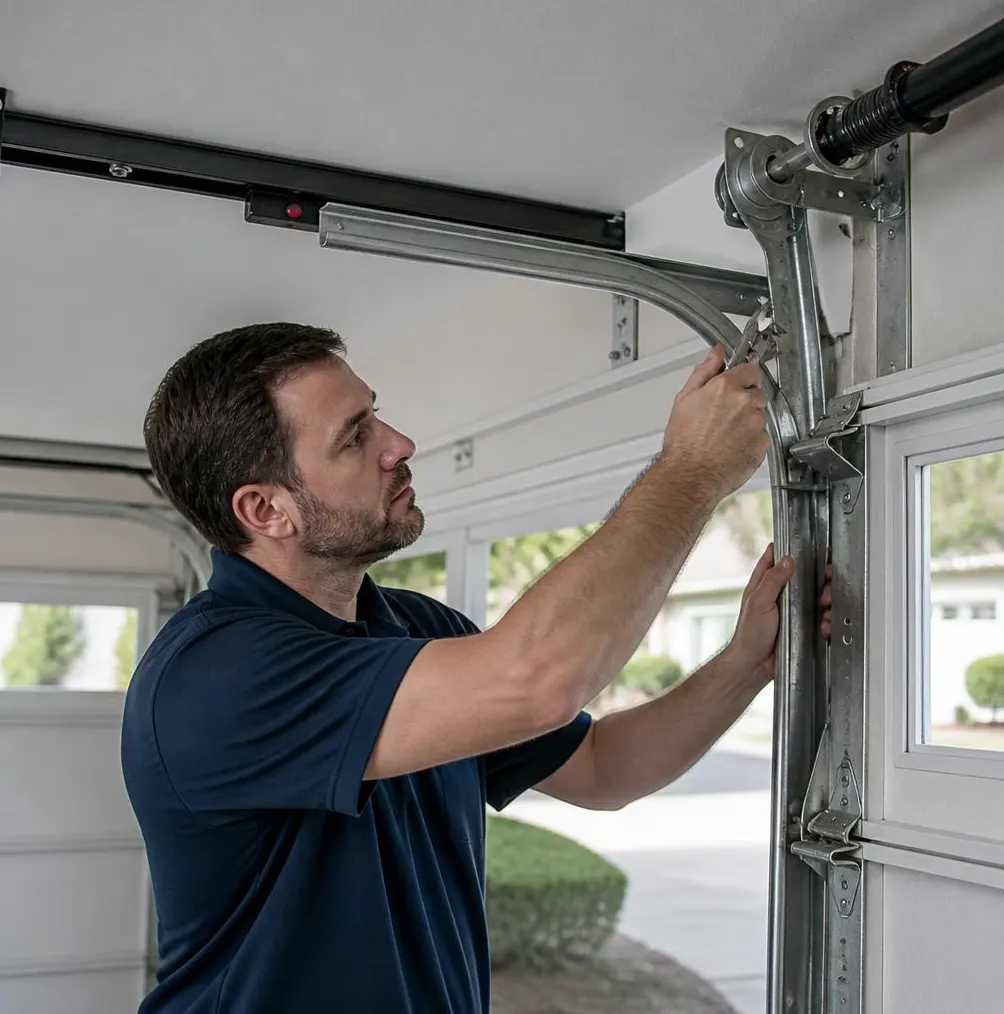
The Morning You Notice It
It's one of the first genuinely cold mornings of the season. You hit the opener button and the door hesitates, groans, then lurches up unevenly instead of gliding. Or maybe it's quieter than that—just a thin line of daylight along the bottom seal that wasn't there in August, or a draft across the garage floor that makes you zip up your jacket before you've even started the car. That's usually the first real sign that your garage door spent the summer getting a little looser, a little stiffer, or a little less sealed than it should be—and winter in Southwest Michigan does not go easy on a door that's already behind.
Why This Stretch of Weather Is Hard on Garage Doors
Deep cold thickens old lubricant and makes metal brittle. Snow and slush track in and melt, then refreeze overnight. Road salt splashes up into the hardware and starts working on bare metal. And once spring thaw hits, mud and moisture find every gap a worn seal left behind. None of that happens all at once—it happens gradually, over months, which is exactly why late fall is the right time to get ahead of it rather than react to a door that's frozen shut in January.
1. Check the Weatherstripping First
The rubber seal along the bottom of the door and the strips along the sides are your first defense against cold air, snow, and wind-driven rain. Over a summer of UV exposure, that rubber can crack, flatten, or pull away from the track. Run your hand along it—if it's stiff, cracked, or doesn't spring back after you press it, it won't seal once it's frozen. Replacement weatherstripping is inexpensive and a reasonable DIY job on a mild afternoon; waiting until it's 20°F outside makes the rubber harder to work with and less likely to seat correctly.
2. Lubricate Hardware Before the Cold Sets In
Rollers, hinges, and the torsion spring itself all need a fresh coat of garage-door-specific lubricant (not WD-40, which is more of a cleaner than a lubricant and burns off quickly). Dry or gummed-up hardware is what makes a door sound like it's grinding on a cold morning. Do this now, while temperatures are still mild enough for the lubricant to spread evenly instead of thickening on contact.
3. Look Hard at the Springs
Springs do the heavy lifting, and cold metal is less forgiving than warm metal—a spring that's been slowly weakening all year is far more likely to finally give out on a frigid day than a mild one. Warning signs include a door that feels heavier than usual when lifted manually, visible gaps in the spring coils, or a door that slams down the last foot instead of settling. Springs are also under serious tension and genuinely dangerous to replace yourself; this is one repair worth having a technician handle rather than tackling solo.
4. Clear and Inspect the Tracks
Summer dust, pollen, and the occasional stray tool can build up in the tracks without causing obvious problems—until winter grit, salt spray, and ice start accumulating on top of it. Wipe the tracks down and check for dents or misalignment. A track that's slightly bent might not show symptoms until a door tries to roll through it while coated in ice.
5. Test the Auto-Reverse and Opener
Cold weather is tough on garage door openers, especially older belt or chain units and anything running on an aging circuit board. Put a block of wood under the door and make sure it reverses when it meets resistance—this safety feature matters even more once kids and pets are spending more time indoors near the garage. If the opener has been struggling, stuttering, or responding slowly to the remote, that's worth addressing before it's doing it in sub-zero temperatures.
6. Rinse Off Salt Through the Season
Once winter driving starts, salt spray from the road ends up on the bottom panel and hardware more than most homeowners realize. An occasional rinse-down on a warmer day keeps corrosion from taking hold on tracks, hinges, and the bottom of the door itself.
When to Call Benton Harbor Garage Door
If your door is slow, noisy, uneven, or you're seeing real wear on the springs or seals, it's worth having it looked at before the hard cold sets in rather than after something fails. Benton Harbor Garage Door offers Preventive Maintenance visits to catch exactly these issues—worn rollers, weak springs, misaligned tracks—while they're still small, and Spring Replacement done safely with the right tools and tension equipment if a spring is already on its way out. We show up on time, tell you plainly what we find, and fix what actually needs fixing.
If your garage door is giving you trouble as the weather turns, call Benton Harbor Garage Door today and get it sorted before the snow flies in Benton Harbor, MI.